Wednesday
00:00Wednesday
Episode 219. Youth Empowerment This episode will aim to explore the role of youth empowerment both in secular society and within Islam, specifically the Ahmadiyya Muslim Community. To do this we will explore the importance of the youth raising their voices and speaking out against injustice and the role of social media in this, the establishment of the Nasirat and Atfal programmes and the impact these have had on the community and we will also explore other initiatives led by the youth of the Ahmadiyya Muslim community and how these have empowered the youth of today.
Learn more
01:00Wednesday
Episode 4. As per WHO estimate, 1.13 billion people worldwide have high blood pressure or hypertension. Almost all of them known as essential or primary hypertension. This an entirely a treatable condition. Unfortunately, a vast majority of the hypertensive patients are undertreated, and a significant number of people are unaware that they have high blood pressure. In this episode, we discuss the importance of health check and how to monitor blood pressure at home. We also highlighted the complications of untreated hypertension.
Learn more01:30Wednesday
Episode 1. This special 30-part series delves into the divine attributes of God Almighty, exploring their significance and relevance in our lives. Through these discussions, we seek to answer fundamental questions: Who is our God? How can we recognize Him? And how do we strengthen our connection with Him through an understanding of His attributes? In today's episode, we focus on the attribute Ar-Rahman (The Most Merciful). With the insights of an esteemed guest, we will explore the depth of this characteristic, its impact on our spiritual journey, and its manifestation in our daily lives.
Learn more
02:00Wednesday
Bait-ur-Raheem Mosque: A New Chapter For Wales Part 2 In this concluding chapter of the Cardiff Mosque Documentary, we witness the historic inauguration of Baitur Raheem Mosque — a milestone not only for the Ahmadiyya Muslim Community in Cardiff but for the wider Welsh society. Distinguished guests representing government, faith communities, and local neighbourhoods share their heartfelt reflections on what this new mosque means for unity, peace, and community cohesion. At the heart of this momentous occasion is the presence and guidance of the worldwide Head of the Ahmadiyya Muslim Community, His Holiness Hazrat Mirza Masroor Ahmad (may Allah be his Helper). His keynote address outlines the true mission of the mosque: to serve humanity, foster mutual respect, and strengthen the bonds of society. Part 2 beautifully captures the joy, gratitude, and hope surrounding this new beginning — a powerful reminder that Bait-ur-Raheem mosque is more than a building. It is a beacon of love, open to all, and dedicated to the timeless motto of the Ahmadiyya Muslim community: Love for All, Hatred for None.
Learn more
03:00Wednesday
Episode 1: The Islamic Renaissance: The Historic Journey of Hazrat Mirza Bashir-ud-Din Mahmud Ahmad, Khalifatul Masih II, in 1924 In this episode, we explored the historical presence of Islam in the UK before the arrival of Ahmadiyya Muslim missionaries before the start of the 20th century. We also covered the significant to establish Islam in Western countries and the prophecies of the Holy Prophet, may peace and blessings of Allah be upon him, concerning this matter i.e. “Sun of Islam rising from the west”. How did the promised Messiah, peace be on him, fulfil this prophecy? We also covered the companions of the Promised Messiah, peace be on him, that were sent to England during his lifetime.
Learn more
04:00Wednesday
Season 4 Episode 9. Special 2 Part Series on the Science and Health Benefits of Olive Oil From the Grove to the Kitchen: The Truth About Cooking, Choosing and Using Olive Oil The second episode in this powerful two-part series brings the science into everyday life. Special guests and global olive oil authorities Dr Simon Poole and Judy Ridgway discuss practical tips and clarify myths and misconceptions: Can extra virgin olive oil be safely heated? How do you choose a high-quality oil? How does olive oil compare with seed oils, butter and ghee? This episode equips listeners with clear, evidence-based guidance to transform how they cook and eat. Woven throughout is the reminder that the olive tree is a revered and blessed tree across the three Abrahamic faiths and holds particular reverence in Islam where olive oil has been specified to provide nourishment and healing. Essential listening to learn about the amazing benefits of the oil from this blessed tree.
Learn more
05:00Wednesday
Episode 39. Dr Mohammed Iqbal the host of Living History looks at the impact on Africa of European Colonisation, and with special guest Dr David Harris from the University of Bradford. Dr Harris is a Senior Lecturer in African Studies, which is a Division of Peace Studies and International Development, at the University of Bradford. David welcome. Dr David Harris specialises in West African politics, in particular in Sierra Leone and Liberia, but also in The Gambia and Ghana. His first book was published by IB Tauris in 2011; and a second book, Sierra Leone: A Political History, came out through Hurst first in 2013 and then in an updated second edition in 2020.
Learn more06:00Wednesday
Episode 2. A lively discussion between scholars of completely different religions to tackle one tough question. In this week's episode, "A Sunni, Shia, Catholic and Ahmadi inquire why this (the Messiah) is a concept only in Abrahamic faiths?".
Learn more06:30Wednesday
Tune is to hear recitation of the Holy Qur'an, Chapter 18 Verse 51-75. Recitation of the Holy Qur'an is by Maulana Feroz Alam.
Learn more
07:00Wednesday
Wake up to the Breakfast Show and catch up with the latest news stories.
Learn more
09:00Wednesday
Repeat of a live interactive show recorded on 26th July 2026.
Learn more
10:00Wednesday
Episode 3. This episode will introduce IAAAE’s pioneering Model Village Projects, tracing its history and the transformative impact they’ve had in underserved regions. These projects seamlessly blend essential infrastructure—water, energy, light, sanitation, and more—into sustainable, holistic solutions designed for long-term success. Listeners will journey to the first model village in the desert region of Burkina Faso, gaining insight into the challenges of working in remote areas where rich local knowledge and extensive reach are vital to delivering impact. Beyond infrastructure, the episode will explore the rich social benefits these projects bring, highlighting the shared expertise and commitment of IAAAE volunteers on the ground. Finally, we’ll hear about the deeply moving experiences of both beneficiaries and volunteers, whose lives are both forever changed through this powerful work.
Learn more11:00Wednesday
Episode 220. Critical Self-Reflection From the moment we are born, we learn from our environment and form our understanding of life concepts and beliefs. When life presents us with challenges, we may find ourselves in conflict with our beliefs; we fail to go beyond the shadows of our doubts and fears, which often leaves us feeling lost. However, we know that the Holy Quran is the ultimate guide for mankind. How can we draw upon its light during times of darkness? How can Quranic verses become a stimulus for deeper critical self-reflection and connect us on a philosophical level to our Creator?
Learn more12:00Wednesday
Series 3 Episode 7. This episode will cover the future of transportation with a focus on vehicles. The episode will be broadly about the electrification of vehicles. In terms of electrification, the motivation behind this will be discussed. The targets and challenges for achieving this transition towards electric vehicles will be discussed. Batteries, electric motors and related technology will be discussed. Fuel cells and the hydrogen economy will be discussed. In the concluding section, the prophecies of the Holy Prophet (saw) will be presented and the verse of the Holy Qur’an about the future of transportation will be presented.
Learn more13:00Wednesday
Episode 40. Dr Mohammed Iqbal the host of Living History explores with fellow Panellist, Arif Ahmed the importance of Eidul Adha in Muslim Culture. They look at the historical figure of Prophet Abraham and his important position for over 3 billion people- which includes Muslims, Christians and Jews. In particular they look at the importance of his dream in which he has to sacrifice his ‘only son’- which Muslims believe to by Prophet Ishmael and Jes/Christians believe to be Prophet Isaac. They also explore the high level of trust placed by both Prophet Abraham and his wife Hagar in God Almighty in protecting and providing for them.
Learn more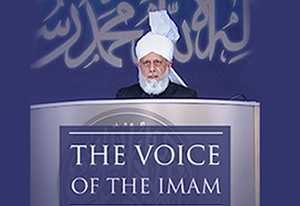
14:00Wednesday
Episode 55. On the 8th October 2019 the World Head of the Ahmadiyya Muslim Community, the Fifth Khalifa (Caliph), His Holiness, Hazrat Mirza Masroor Ahmad delivered an historic keynote address at the United Nations Educational, Scientific, and Cultural Organisation (UNESCO) Headquarters in Paris. The event was attended by over 80 dignitaries and guests, including diplomats, politicians, academics and the representatives of think tanks, as well as business leaders and various other professions.
Learn more14:30Wednesday
Episode 10. Patience – In light of Islamic Teachings. While Islam seeks to inculcate exemplary patience in people that is exhibited solely for thesake of Allah, it also teaches that practising patience does not go without reward. In Islampatience is a condition for reformation.Episode 11. Humility – In light of Islamic Teachings. In Islam the first stage of man’s spiritual developments is that of humility. Islamic teachings help shun false pride by constantly reminding us of the transient nature of this world and our limited capabilities as humans.
Learn more
15:00Wednesday
Episode 5. Regularly described as the religion of peace, Islam provides many avenues through which Muslims are encouraged to move through the world promoting the values of harmony and unity. While we regularly hear about the teachings that inspire us to promote peace, what do we know about the people, specifically, the Muslim women, who have done so? Looking at the state of the current world, it seems even more important to understand how individuals have found ways to push for peace in their lives and communities. In this programme, we will be looking closely at how Muslim women define peace and how they have continued to conform to their roles as peacemakers throughout the history of Islam.
Learn more
16:00Wednesday
Join in the debate of the day in this live interactive discussion programme.
Learn more18:00Wednesday
Episode 41. Dr Mohammed Iqbal, the host of Living History, explores with fellow Panelists, Arif Ahmed and Prof Amir Sharif, the claim of Hazrat Mirza Ghulam Ahmad of Qadian to be the Promised Messiah and Mahdi. They also look at the founding of the Ahmadiyya Muslim Community and the re-introduction of Khilafat within Islam.The script is based on all approved material by senior Jamaat officials including Imam Sahib Ata ul Mujeeb Rashid that was prepared for documentaries to mark Khilafat Centenary celebrations in 2008.
Learn more19:00Wednesday
Season 1. Episode 1. This episode is an introduction to the series. Primarily it covers the importance of the African-American journey to Ahmadiyya Muslim Community. This journey started with the Holy Prophet Muhammad (peace and blessings be upon him). Then as Islam progressed and spread to Africa it became indigenous to the Africans. Then finally we review how Africans came to America in the slave trade.
Learn more
19:30Wednesday
Episode 5. This special 30-part series delves into the divine attributes of God Almighty, exploring their significance and relevance in our lives. Through these discussions, we seek to answer fundamental questions: Who is our God? How can we recognize Him? And how do we strengthen our connection with Him through an understanding of His attributes? In today's episode, we focus on the attribute Al-Malik (The Sovereign). With the insights of an esteemed guest, we will explore the depth of this characteristic, its impact on our spiritual journey, and its manifestation in our daily lives.
Learn more
20:00Wednesday
Series Seven, Episode 5. The Signs and Help of Allah (Nishanaat) for the Promised Messiah (a.s.) from the book Malfoozat. Tune in to learn about the basic teachings of Islam. Tahir Selby is joined by Basil Aziz and Eeqan Ahmad to discuss about the various Signs and Help that Allah gave to the Promised Messiah (a.s.). We discuss a passage from Malfoozat where the Promised Messiah (a.s.) has explained about these Signs and Help that Allah bestowed upon him. In this programme we discuss the sign of Lekh Ram, a leader of a Hindu sect – Arya Samaj, who attacked and abused the Holy Prophet (saw). He demanded a sign from God. He was informed by Hazrat Mirza Ghulam Ahmad (a.s.) that the sign would be his own death. But instead of repenting, he insisted to know the time of his death. Hazrat Mirza Ghulam Ahmad (a.s.) related the prophecy and it was fulfilled, exactly as prophesied.
Learn more21:00Wednesday
Repeat of a live interactive show recorded on 5th July 2026.
Learn more22:00Wednesday
Episode 4. This episode will explore the scope and scale of IAAAE’s Village Projects, emphasizing the critical training provided to volunteer engineers who implement these life-changing initiatives. Using the model village in Gambia as a case study, listeners will gain insight into the pressing demand for water, light, and energy in developing nations and the transformative benefits these projects deliver. We’ll contrast the challenging conditions before these interventions with the profound impact on communities after project completion. The episode will highlight the blessings and fulfillment experienced by volunteers, the challenges of traveling to remote locations, and the warm, welcoming nature of the beneficiaries. Additionally, we’ll showcase IAAAE’s progressive approach to technology and innovation, including the use of drones for village surveys, ensuring sustainable and impactful solutions.
Learn more23:00Wednesday
Episode 221. Sacred Mountains Majestic, breath taking, rolling, undulating, gentle, or sloping, mountains and hills make up part of the landscape on earth. Mountains, daunting and difficult to conquer, are shrouded in mystery. Join us on this programme as we discuss mountains as mentioned in scripture and take a closer look at some mountain ranges in the world today.
Learn more